

Intelligent Transportation System (ITS): A Complete Guide
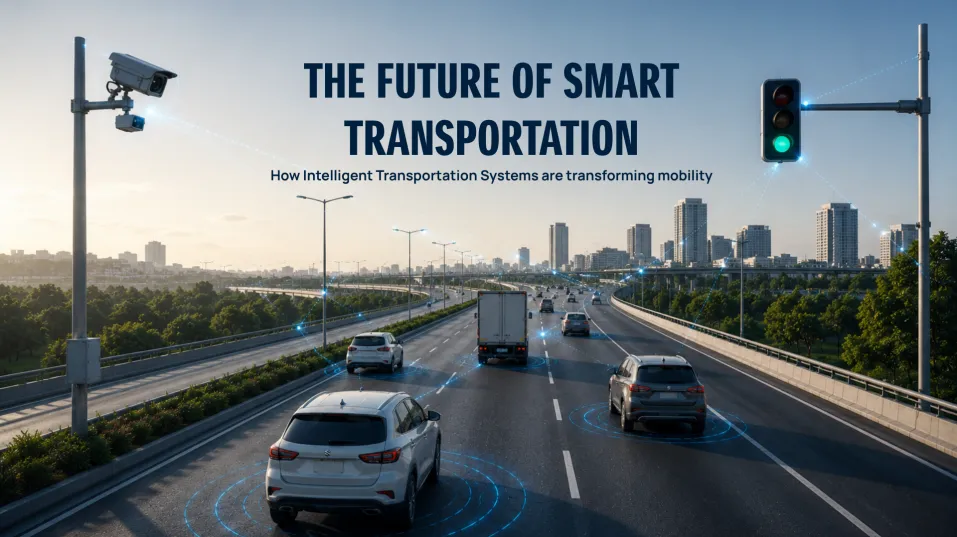
An Intelligent Transportation System (ITS) is a smart technology that uses tools like sensors, communication networks, & data analysis to make transportation better. It helps manage traffic more smoothly and makes travel safer.
Key Components of ITS
The key components of ITS are:
- Sensors
- Control systems
- Communication networks
They connect vehicles & infrastructure elements, these infrastructure elements include road signs and traffic signals. All of these are linked to a central control system.
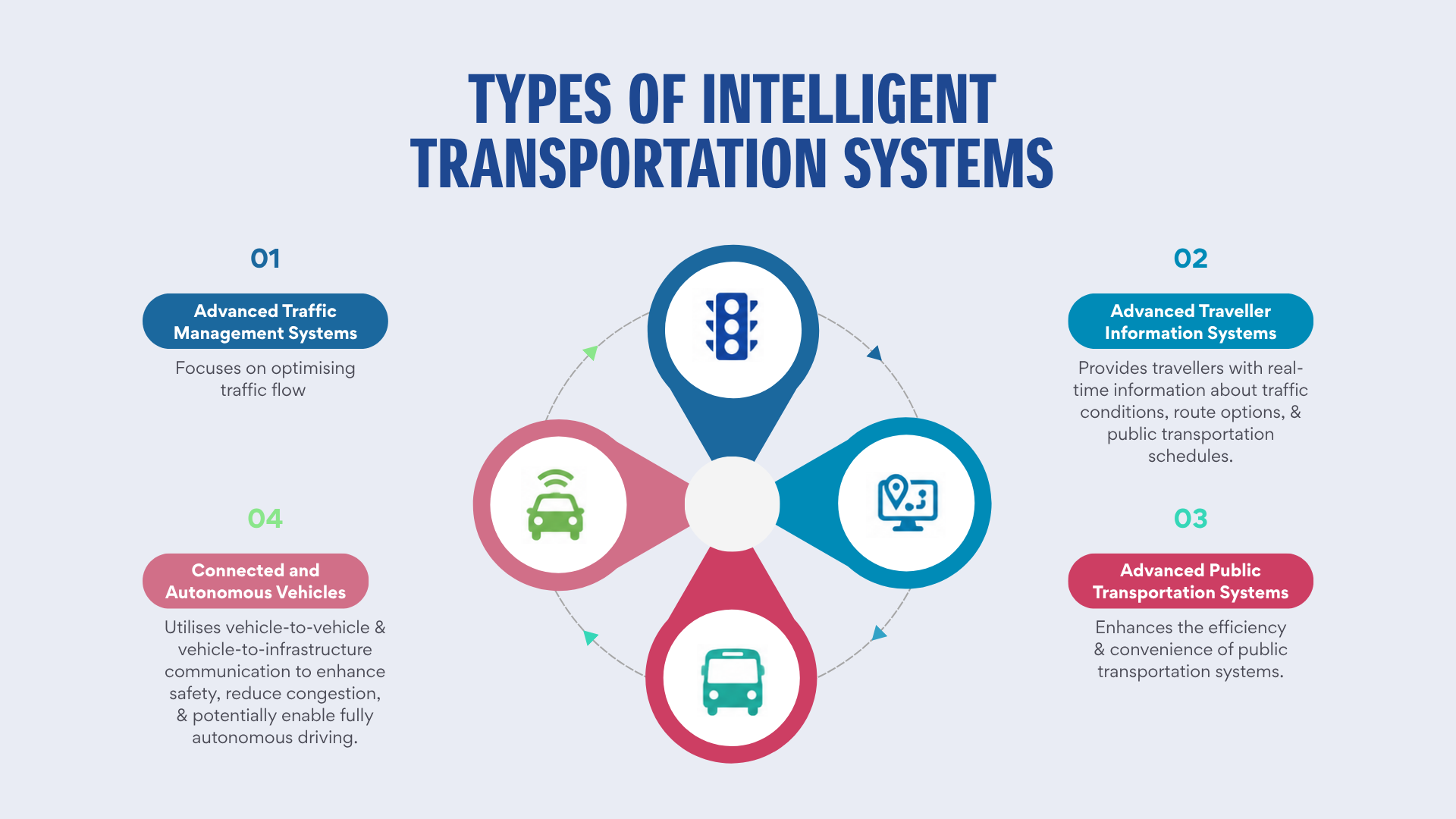
- Advanced Traffic Management Systems: Focuses on optimising traffic flow
- Advanced Traveller Information Systems: Provides travellers with real-time information about traffic conditions, route options, & public transportation schedules.
- Advanced Public Transportation Systems: Enhances the efficiency & convenience of public transportation systems.
- Connected and Autonomous Vehicles: Utilises vehicle-to-vehicle & vehicle-to-infrastructure communication to enhance safety, reduce congestion, & potentially enable fully autonomous driving.
ITS encompasses a wide range of technologies & applications focused on enhancing transportation efficiency, safety & convenience
Why is an Intelligent Transportation System Important?
As cities get bigger & more cars are on the roads, problems like traffic jams, accidents, and pollution happen more often.
ITS helps fix these problems by making traffic move better. It makes roads safer and cuts down pollution. So, travelling becomes easier & better for the environment.
ITS uses real-time data and communication technologies to optimise traffic signals, provide traveller information, prioritise public transport, & manage incidents. This results in reduced congestion, improved safety, and better resource utilisation.
Intelligent transportation systems are essential to address:
- Common transportation challenges
- Traffic congestion leads to longer travel times & increased fuel consumption
- High incidence of road accidents and safety risks
- Inefficient use of infrastructure and public transport systems
- Environmental pollution due to vehicle emissions
How ITS Supports Smart Cities & Sustainable Transport
Intelligent Transportation Systems (ITS) help manage traffic in real time, reducing congestion and cutting emissions. They improve public transport reliability, promote eco-friendly travel like walking and cycling, and provide data for smarter urban planning. ITS makes cities cleaner, safer, and easier to navigate.
Global Trends Pushing ITS Adoption
Increasing urbanisation, environmental concerns, & technological advancements such as 5G and IoT are driving global ITS adoption. Governments are investing in ITS to improve mobility, reduce emissions, and support sustainable development goals.
Core Technologies Behind Intelligent Transportation Systems
Sensors & Data Collection
- Inductive loops embedded in roads detect vehicle presence
- LiDAR & radar provide detailed vehicle and obstacle detection
- Video surveillance monitors traffic & enforces laws
- Environmental sensors track air quality, noise, & weather conditions
Communication Technologies
- GPS & Geolocation enable vehicle tracking and navigation
- Vehicle-to-Vehicle & Vehicle-to-Infrastructure communication allow vehicles and infrastructure to exchange real-time information
- Dedicated Short-Range Communications, 5G cellular, & IoT networks support fast, low-latency data exchange for safety and intelligent traffic management systems
Data Analytics & Decision-Making
- Real-time traffic analysis detects congestion & incidents
- Predictive modelling forecasts traffic patterns & optimises routing
- AI & machine learning improve traffic signal timing and incident response
Smart Infrastructure
- Intelligent traffic signal control adapts light phases to traffic conditions
- Variable message signs provide dynamic traveller information
- Automatic toll collection systems streamline payments & reduce delays
Key Applications of ITS
- Intelligent Traffic Management Systems: Real-time monitoring & control of traffic flow
- Traveller Information Systems: Apps & signs providing up-to-date travel info
- Advanced Driver Assistance Systems: Safety features like collision warnings
- Automated Vehicle Systems: Support for autonomous & connected vehicles
- Fleet & Public Transport Management: Vehicle tracking, scheduling, & priority at signals
- Electronic Fare Payment Systems: Contactless & Automated Ticketing
Benefits of Intelligent Transportation Systems
Intelligent Transportation Systems (ITS) offer numerous benefits such as:
- Safety
- Better accident management
- Traffic control
- Communication between road users
- Connected vehicles
- Environmental sustainability
- Reducing congestion
- Smart transportation is safer
- Sustainable transport
With ITS, we can achieve smarter, safer, and more sustainable transportation systems for the future.
ITS in Action: Real-World Case Studies
- Delhi’s Traffic Control Centre: Uses ITS for traffic monitoring and management in a highly congested urban environment
- Tokyo’s Adaptive Traffic Signal Systems: Employ real-time data to optimise signal timing and reduce congestion
- Stockholm’s Congestion Pricing Model: Combines ITS with economic incentives to reduce traffic and emissions
Challenges in ITS Implementation
- Infrastructure limitations, especially in developing countries
- Data privacy & cybersecurity concerns due to extensive data collection
- Interoperability & standardisation issues among diverse ITS technologies
- Funding constraints & uncertain return on investment
Future of ITS: What’s Next?
- Integration with autonomous vehicles to enhance safety & efficiency
- Advanced AI & predictive traffic systems for smarter urban mobility
- Mobility-as-a-Service (MaaS) platforms combine various transport modes
- Urban Air Mobility & drone logistics for new transport paradigms
- Role of 5G & Edge Computing in enabling real-time, scalable ITS applications
Conclusion
ITS is transforming transportation by making it safer, more efficient, & sustainable.
With urban growth and environmental challenges escalating, ITS adoption is urgent to improve mobility and quality of life. Governments, industry, & citizens must collaborate to implement ITS solutions that pave the way for smarter, greener cities.