
Artificial Intelligence in Transportation: Benefits and Use Cases
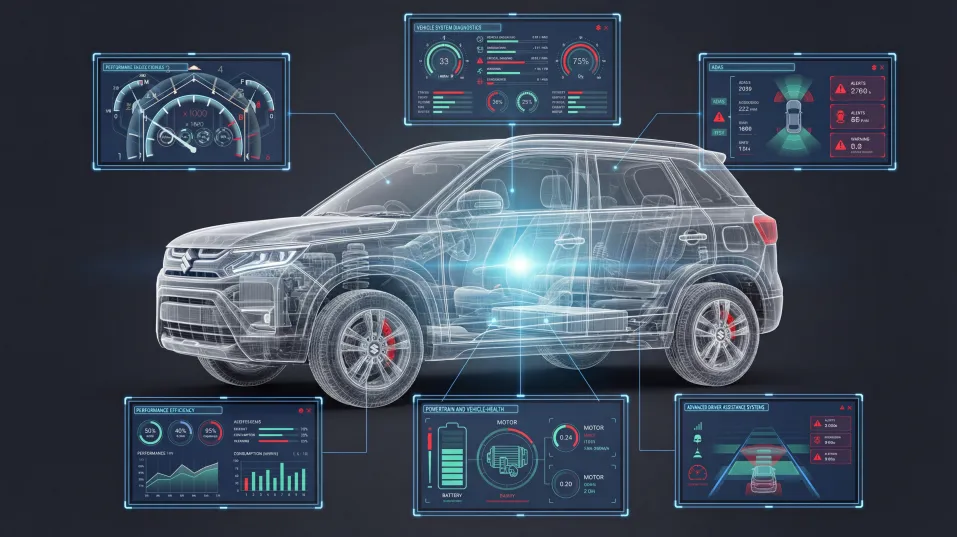
Artificial Intelligence (AI) in transportation boosts safety, efficiency, & sustainability by enabling self-driving cars, optimising routes, managing traffic, and predicting maintenance needs. This leads to fewer accidents, lower costs (fuel, operations), reduced congestion, & better passenger experiences through smart systems and predictive logistics.
Benefits of Artificial Intelligence in Transportation
- Reduced Traffic
- Better Safety
- Lower Costs
- Faster Deliveries
- Eco-Friendly
These advantages of AI in transportation make it important for developing smart cities.
Key Applications of AI in Transportation
Autonomous Vehicles & Delivery Drones
One of the best-known AI in transportation examples is the rise of autonomous or self-driving vehicles. They use many sensors like LiDAR, Radar, & cameras. AI processes this information to understand road conditions, identify obstacles, follow lane markings, & make safe driving decisions.
How it helps:
- Reduces accidents caused by human error
- Makes long-distance travel easier
- Helps companies deliver goods faster
- Can reduce traffic jams in the future
This is one of the biggest developments in artificial intelligence in the transportation industry.
Smart & Automated Traffic Management Systems
AI is also used in traffic control centres to manage road traffic in real time. This is a major AI application in transportation used in many Indian cities.
AI studies live video feeds from CCTV cameras, traffic sensors, & vehicle movement data. Then it:
- Adjusts traffic signals automatically
- Predicts which areas will get crowded
- Suggests better routes to drivers
- Reduces waiting time at signals
- Helps emergency vehicles move faster
This system helps create a smoother artificial intelligence in the transport system that saves time and reduces pollution.
Predictive Maintenance for Vehicles & Public Transport
Another important example of AI in transportation is predictive maintenance. It monitors vehicle health in real time.
AI checks for:
- Engine problems
- Battery issues
- Tire wear
- Brake health
- Fuel efficiency
It warns the owner before there is a failure. This is especially helpful for logistics companies, buses, metros, and big transport fleets.
Benefits:
- Less breakdown
- Lower repair cost
- No sudden delays
- Longer vehicle life
Predictive maintenance is one of the biggest advantages of AI in transportation for businesses.
Route Planning & Delivery Optimisation
AI helps plan the best delivery routes in real time. This is a popular AI for transportation solutions used nowadays.
AI checks:
- Traffic
- Weather
- Road conditions
- Fuel use
- Delivery urgency
Then it suggests the fastest and cheapest route.
Helps with:
- Saving fuel
- Reducing delivery time
- Lowering costs
- Handling last-mile delivery easily
This application of AI in transportation is used by companies like Swiggy, Zomato, Amazon, Flipkart, Ola, Uber, & many logistics firms.
Advanced Driver Assistance Systems (ADAS)
ADAS is already available in many new cars in India. These are AI-powered driver safety features like:
- Adaptive cruise control
- Lane-keeping assist
- Automatic emergency braking
- Forward collision warning
- Blind-spot monitoring
These systems use sensors & cameras to reduce human mistakes and avoid accidents. Such safety systems are major features of the modern AI transportation system.
AI in Shared Mobility & Public Transport
AI helps public transport systems run more smoothly. For example:
- Forecasting passenger demand
- Planning bus or metro schedules
- Reducing waiting time
- Improving ticketing systems
- Giving live updates about the bus or metro arrival
Infrastructure Inspection Using AI Drones
AI-powered drones & cameras are used to inspect roads, bridges, flyovers, and railway tracks. This method is faster & safer than manual inspection.
AI can identify:
- Cracks
- Weak points
- Water leakage
- Corrosion
- Damage
This helps the authorities fix problems before they become dangerous. It is another important AI application in transportation for safety.
Automated Number Plate Recognition (ANPR)
AI can read vehicle number plates automatically using computer vision. This is used in:
- Parking management
- Toll booths
- Traffic police systems
- Law enforcement
- Smart city monitoring
How AI is Transforming Transportation?
Safety & Traffic Management
Artificial intelligence in transportation plays a major role in improving road safety & traffic flow. One of the biggest benefits is that AI systems help reduce accidents.
Modern AI tools monitor driver alertness, vehicle condition, & road hazards. They can warn drivers and help prevent risky situations. In the future, autonomous vehicles will make travel even safer by reducing human error.
AI also supports efficient traffic flow. It studies real-time traffic data & adjusts traffic signals automatically. This helps reduce congestion, smoothens vehicle movement, & shortens overall travel time.
Another helpful use of AI in transportation is emergency response. With smart traffic lights & AI-based coordination, emergency vehicles like ambulances can get a clear path quickly, saving valuable time.
Logistics and Operations
The application of AI in transportation has changed logistics and daily operations in a big way. One major benefit is optimised routing and delivery. AI powers navigation apps to provide the best possible routes. In logistics, AI helps plan routes for large fleets, balance loads, & forecast demand. This reduces fuel use, waiting time, and operational costs.
Another important AI application in transportation is predictive maintenance. AI studies vehicle data & predicts when a vehicle might need repairs. This prevents sudden breakdowns and keeps vehicles running smoothly.
AI also supports streamlined supply chains. Platforms use AI to match freight loads with carriers, automate pricing, & plan delivery schedules. Chatbots powered by AI help customers with quick updates and support.
User Experience and Future Development
AI and transportation are becoming more connected as cities grow smarter. One useful feature is personalised travel. AI suggests travel options, routes, & timings based on a person’s preferences and real-time demand. This improves the overall travel experience.
AI also helps create smarter infrastructure. By studying city data, AI identifies areas that need better transport services. It can also simulate how new roads or public transport systems will affect the city. This is a big step forward for urban planning.
A major advancement in the artificial intelligence in the transportation industry is the rise of autonomous systems. Self-driving cars, delivery robots, & automated public transport are examples of AI in transportation that will shape the future. These systems promise safer roads, lower pollution, & smoother journeys for everyone.
Use Cases of AI in Transportation
Vehicle & Driver Applications
Autonomous Vehicles
AI in automotive allows autonomous vehicles to drive themselves by understanding the surroundings using sensors and cameras.
ADAS
Features like automatic braking, lane departure warnings, & pedestrian detection help keep drivers safe.
Driver Monitoring
It checks if the driver is tired or driving unsafely & gives warnings to prevent accidents.
Predictive Maintenance
AI examines vehicle data to predict problems before they happen. It reduces breakdowns & downtime.
Traffic & Infrastructure Management
Real-Time Traffic Control
AI adjusts traffic lights & manages vehicle flow to prevent congestion.
Smart Parking
It helps drivers quickly find available parking spaces.
Road Condition Monitoring
AI detects damaged roads or potholes & alerts authorities.
Traffic Incident Detection
It identifies accidents or blockages. Hence, you can quickly reach your destination.
Logistics & Fleet Management
Route Optimisation
AI finds the most efficient routes by considering traffic, weather, & fuel use.
Demand Forecasting
It predicts demand to plan transport schedules & inventory.
Fleet Efficiency
AI helps use vehicles efficiently. It reduces empty trips & saves fuel.
Public Transport & Customer Experience
Demand-Responsive Scheduling
AI adjusts bus or train timings based on passenger needs in real time.
Personalised Travel Information
Apps & chatbots provide live updates. It helps with bookings, & suggests routes.
Automated Ticketing
AI makes buying tickets faster & simpler.
Safety & Environment
Collision Prevention
AI-powered systems help avoid accidents.
Emergency Vehicle Prioritisation
AI gives green lights to ambulances & fire trucks to reach destinations faster.
Emission Reduction
Optimised routes & less waiting time reduce fuel use and pollution.
AI Tools and Technologies in Transportation
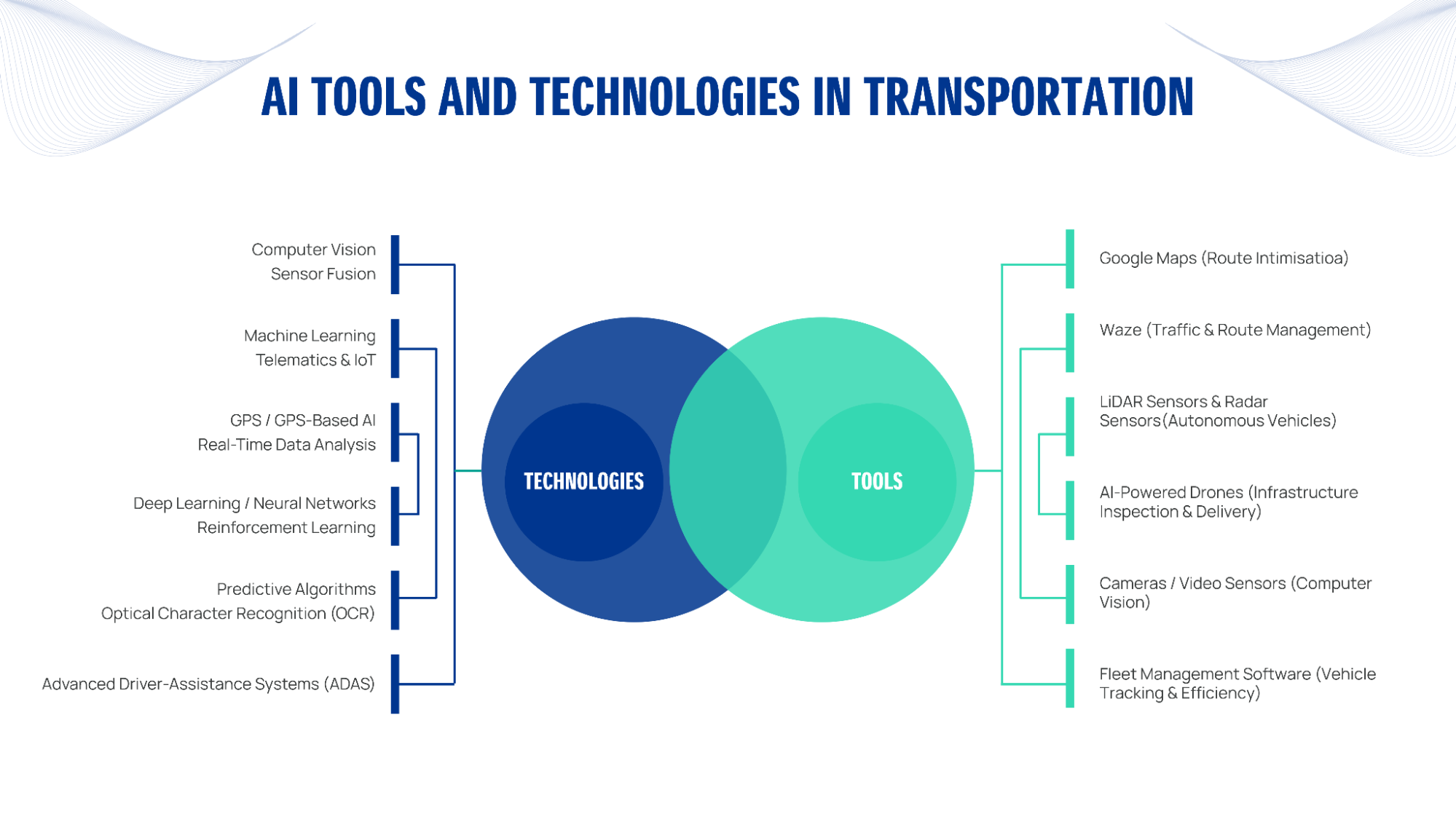
AI Technologies
- Machine Learning
- Deep Learning / Neural Networks
- Reinforcement Learning
- Predictive Algorithms
- Real-Time Data Analysis
- Computer Vision
- Sensor Fusion
- Optical Character Recognition (OCR)
- Telematics & IoT
- Advanced Driver-Assistance Systems (ADAS)
- GPS / GPS-Based AI
AI Tools / Platforms
- Google Maps (Route Optimisation)
- Waze (Traffic & Route Management)
- LiDAR Sensors (Autonomous Vehicles)
- Radar Sensors (Autonomous Vehicles)
- Cameras / Video Sensors (Computer Vision)
- Fleet Management Software (Vehicle Tracking & Efficiency)
- AI-Powered Drones (Infrastructure Inspection & Delivery)
Limitations of AI in Transportation
- High Cost
- Technical Challenges
- Safety Concerns
- Infrastructure Limitations
- Privacy Issues
- Job Impact
Suzuki R&D India is working to make transportation smarter & safer. We develop advanced vehicle technologies, test driver-assistance systems, improve sensors & AI algorithms, and bring global innovations to Indian roads.