

Regenerative Braking – How it Actually Works?
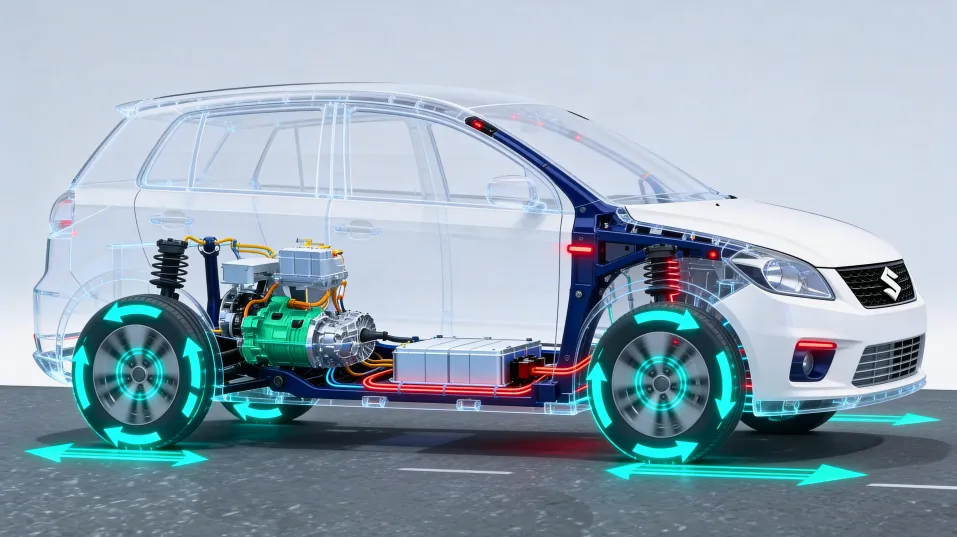
Regenerative braking uses an electric vehicle's motor as a generator to capture kinetic energy (motion) during deceleration. This energy is converted into electricity & then is sent back to recharge the battery.
When you lift off the accelerator or press the brake pedal, the function of the motor reverses. The spinning wheels drive the motor. This creates resistance that slows the car while generating power to store. Thus significantly improving efficiency & reducing brake wear.
Importance of Regenerative Braking
With fuel prices going up, increasing pollution, & more people switching to electric vehicle, regenerative braking has become a very important feature. It improves:-
- Overall efficiency
- Increases range
- Lowers maintenance costs
- Makes driving better for the environment
It helps electric vehicles:-
- Save energy
- Improve mileage
- Work better overall.
Features of Regenerative Braking
One-Pedal Driving
Many electric cars allow the car to slow down when you lift your foot off the accelerator. This means you can control the speed mostly using just one pedal.
Adjustable Levels
Drivers can also choose how strong the regenerative braking system should be. It can be set to light or strong. This depends on driving comfort & road conditions.
Tools, Technolgies, & Components Involved in Regenerative Braking
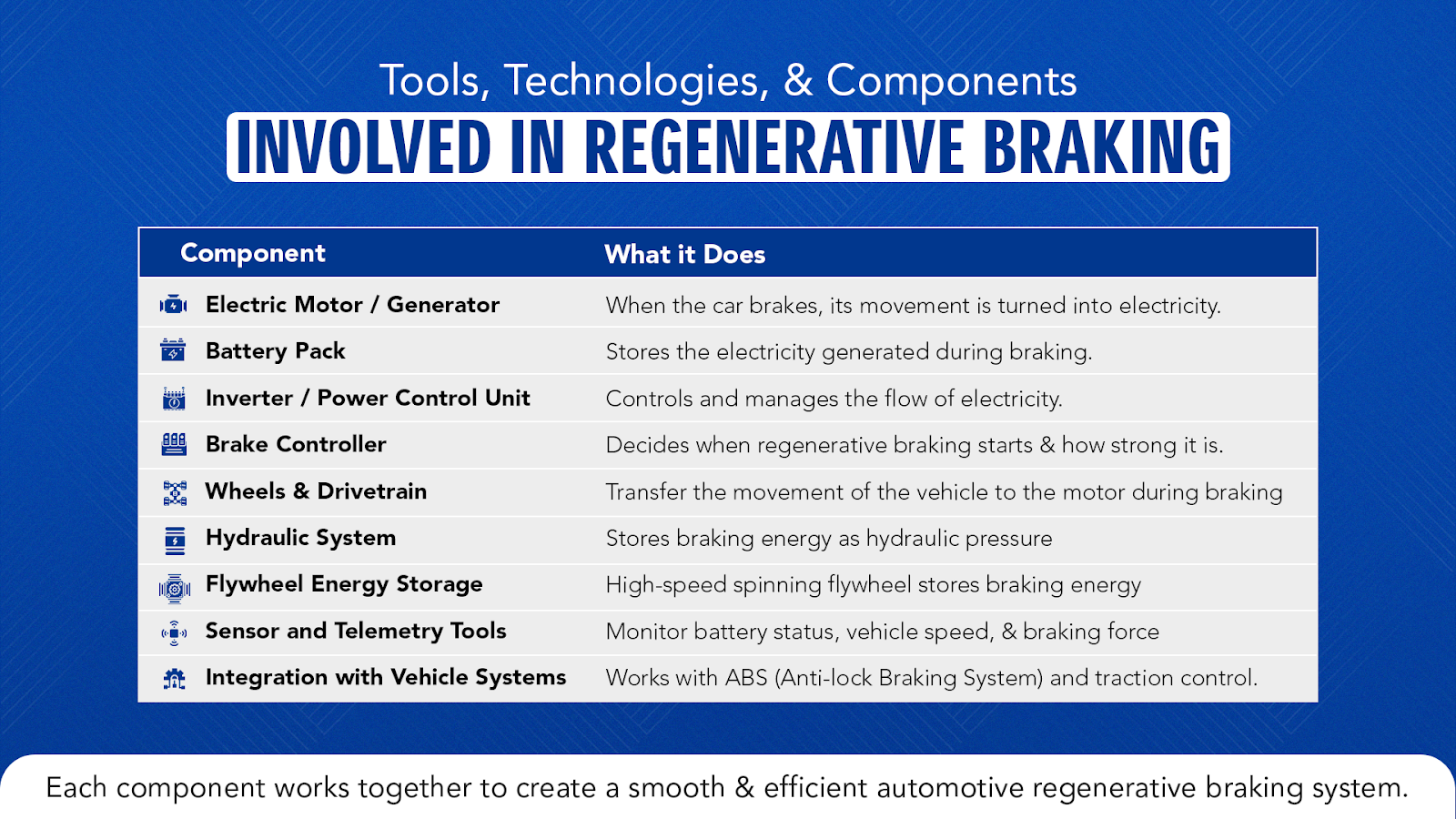
- Electric Motor / Generator: Converts the vehicle’s movement into electricity during braking.
- Battery Pack: Stores the electricity generated through regenerative braking for later use.
- Inverter / Power Control Unit: Regulates and manages the flow of electrical energy within the system.
- Brake Controller: Determines when regenerative braking should begin and controls its intensity.
- Wheels & Drivetrain: Transfer the vehicle’s motion to the motor during braking.
- Hydraulic System: Stores braking energy in the form of hydraulic pressure.
- Flywheel Energy Storage: Uses a high-speed spinning flywheel to store braking energy mechanically.
- Sensors & Telemetry Tools: Monitor battery condition, vehicle speed, and braking force in real time.
- Integration with Vehicle Systems: Works together with ABS (Anti-lock Braking System) and traction control to maintain stability and safety.
Regenerative Braking: How it works?
Motor to Generator
When you lift off the accelerator or press the brake pedal in an EV, the electric motor reverses its function & becomes a generator.
Energy Conversion
The vehicle's forward momentum (kinetic energy) spins the motor. This now generates electricity.
Energy Storage
This electrical energy is sent back to the battery to be stored for later use.
Slowing Effect
The resistance from the generator slows the car down, similar to engine braking.
Types of Regenerative Braking Systems
1. Electric (Motor-Based) Regeneration
This is the most common type in electric & hybrid cars. When you brake, the electric motor works like a generator & creates electricity.
2. Hydraulic Regeneration
Used mainly in heavy vehicles like trucks & buses. Braking energy is stored as hydraulic pressure. This stored energy is reused to help the vehicle move.
3. Flywheel Regeneration
Braking energy spins a flywheel at high speed. The stored energy is released later when needed. Mostly used in racing cars & advanced systems.
Benefits of Regenerative Braking
Increases Driving Range
Regenerative braking sends energy back to the battery. This helps the vehicle run longer on one charge.
Reduces Brake Wear
The motor helps slow the vehicle. So, brake pads are used less and last longer.
Saves Energy
Energy that is normally wasted is used again. This saves power and money.
Eco-Friendly
Less energy waste means less pollution. This is good for the environment.
Smooth Driving Experience
The vehicle slows down gently when you lift your foot off the accelerator. This makes driving more comfortable.
Applications of the Regenerative Braking System
- Cars with regenerative braking
- Heavy vehicles like buses & trucks
- Racing & advanced performance vehicles
Best regenerative braking improves mileage, reduces maintenance, & makes driving eco-friendly.
Limitations of Regenerative Braking
- Limited Efficiency: Some energy is always lost during the braking process.
- Less Effective at Low Speed: At very slow speeds, normal brakes are needed to stop the vehicle completely.
- Brake Transition: Switching between regenerative & regular brakes may feel slightly sudden.
- Overall Benefit: Despite these small limits, regenerative braking saves energy & reduces brake wear. This makes it very useful.