

Self-Driving Cars Explained: Technology, Benefits, Challenges & Future
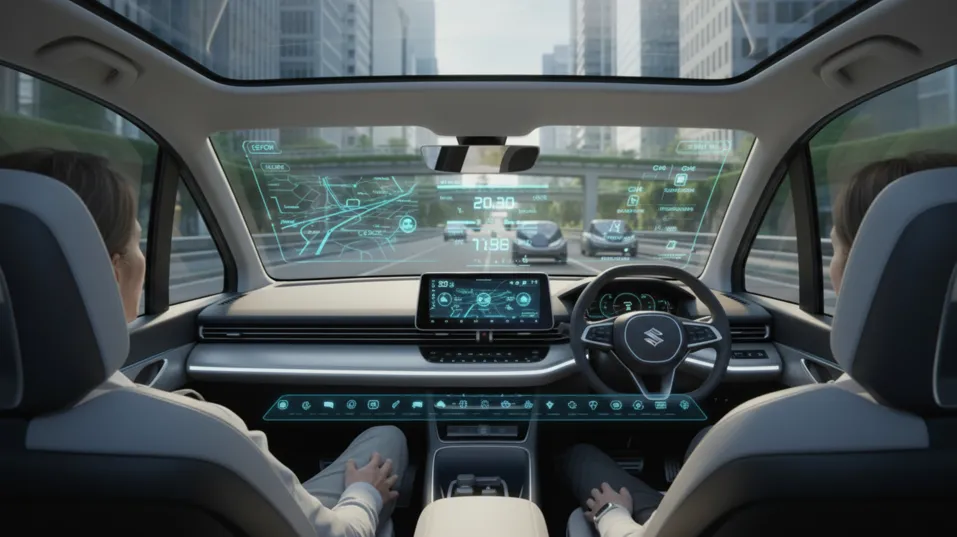
A self-driving car, also known as an autonomous vehicle (AV) or driverless vehicle are vehicle that uses sensors, cameras, radar, GPS, and Artificial Intelligence to drive safely on the road without any human intervention.
Self-driving or autonomous driving cars are designed and equipped to:-
- Detect and interpret the environment, like roads, signs, pedestrians, and other vehicles
- Make real-time driving decisions such as stopping at signals, changing lanes, or avoiding obstacles
- Improve safety by reducing human error to avoid accidents
- Enhance mobility for those people who cannot drive
- Increase efficiency in traffic flow and fuel use.
How Do Self-Driving Cars Work?
A self-driving car has many smart systems working together:
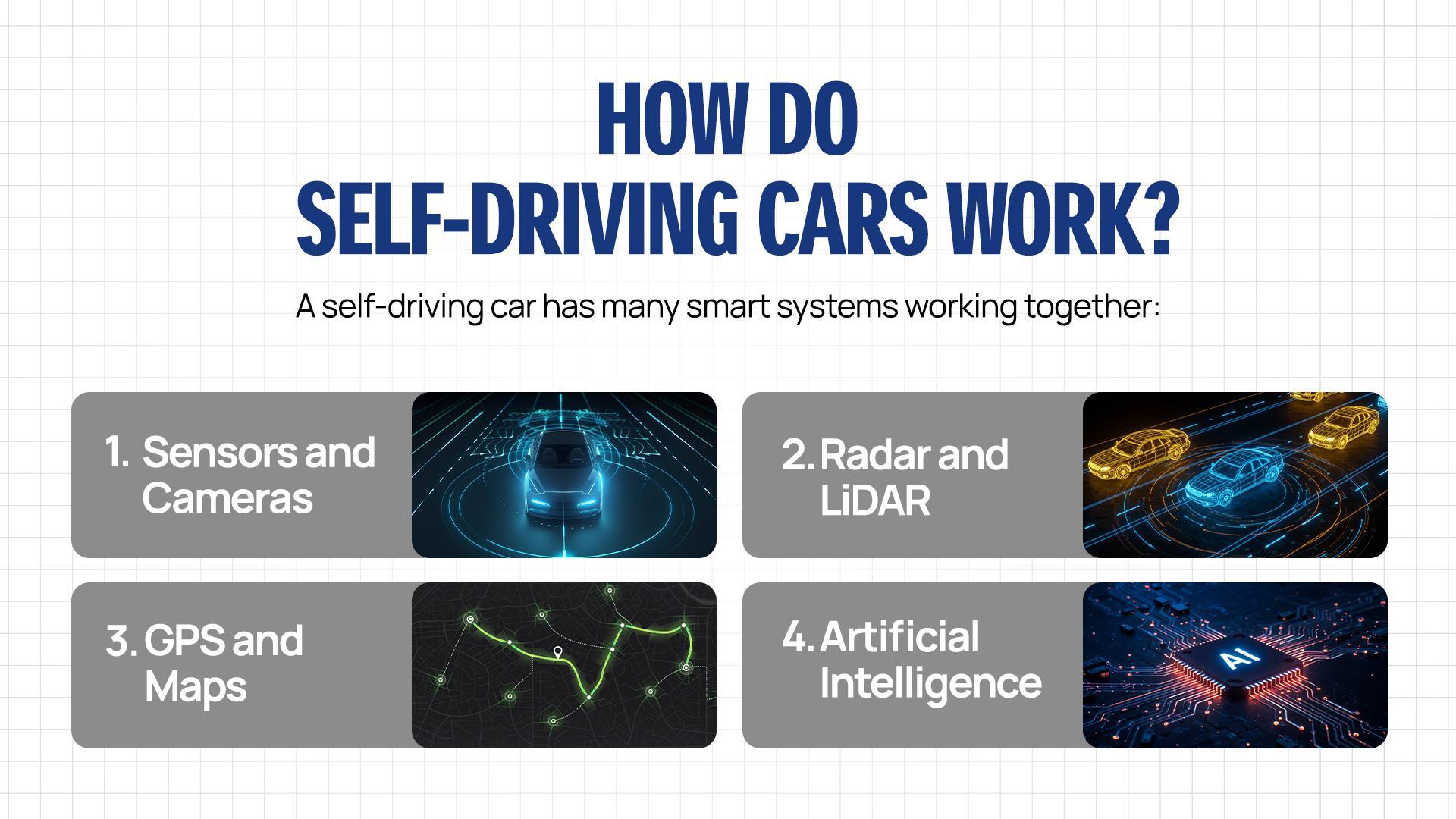
Sensors and Cameras:
In self-driving vehicles, such as cars, sensors and cameras act like the eyes of the car. These devices detect other cars, people, animals, traffic signs, and more.
Radar and LiDAR:
Radar uses radio waves, and LiDAR sensors use lasers to measure how far objects are and help the car avoid crashes.
GPS and Maps:
An autonomous car knows its location and the best route using GPS, just like Google Maps.
Artificial Intelligence:
It reads all the data from sensors and makes decisions like a driver would – when to turn, brake, or change lanes.
Levels of Autonomy in Self-Driving Cars
Experts have defined 6 levels of automation in self-driving cars:
- Level 0: No automation – you do all the driving
- Level 1: Basic help like cruise control
- Level 2: The car can steer and control speed, but you must stay alert
- Level 3: The car does most tasks, but you might need to take control sometimes
- Level 4: Car drives on its own in most cases – no help needed
- Level 5: Fully driverless – no steering wheel or pedals!
Right now, most cars are at Level 2 or Level 3.
Benefits of Self-Driving Cars
1. Fewer Accidents
Most road accidents happen due to human mistakes. It includes speeding, drunk driving, or using a phone while driving. Self-driving cars follow traffic rules and react faster. It can help reduce accidents.
2. More Free Time
No need to focus on driving. You can relax, work, or enjoy the ride, especially helpful during long drives or traffic jams. It also opens the door for remote driving, where a human can control the car from another location using cameras and internet connections.
Useful for:
- Driving cars to or from service centres
- Pickups from airports or late-night locations
- Fleet services (like rental cars or delivery vehicles)
3. Helps People with Disabilities
Elderly people or those who cannot drive (like the blind or disabled) can travel safely and independently.
4. Saves Fuel
Smart or autonomous driving by these cars helps in better fuel usage. This saves money and reduces pollution.
5. Fewer Traffic Jams
These cars drive smoothly and maintain proper distances. It helps in reducing traffic problems.
Challenges of Self-Driving Cars
1. Technology is not Perfect
Bad weather, like heavy rain or fog, can confuse sensors. Sudden events on the roads are also hard for these cars to handle.
2. Very Costly
The cameras, radars, and AI software used in these cars are expensive. So the cars are costly too.
3. Who Is Responsible in an Accident?
If a self-driving car causes an accident, who is at fault – the car manufacturers, the software maker, or the person sitting inside? Laws are still not clear.
4. Loss of Jobs
Truck drivers, taxi drivers, and others who drive for a living fear they may lose jobs if everything becomes automatic.
5. People Do Not Trust Yet
Many people are still not ready to sit in a car without a driver. It will take time to build public trust.
What Will Speed Up Self-Driving Growth?
To make self-driving cars more common, we need:
- More investment in software (for decision-making and safety)
- Clarity on insurance and regulations
- Wider testing and public trust
Future of Self-Driving Cars
Big global companies are working hard to make self-driving cars safe and ready for the public. In developed countries like the USA, these cars may become common in the next 5 to 10 years.
It may take longer for self-driving cars in India to become a reality — possibly 10 to 15 years — due to road conditions and traffic behaviour. But progress has already started!
Conclusion
Self-driving cars are not just science fiction. These cars are real and coming sooner than we think. They will help us travel more safely and easily – and bring big changes to the way we live and move.
Keep an eye on this exciting technology. Who knows?
One day, your car might just say, “Sit back and relax – I’ve got this!”